Progressive Cavity Pump Failure: Root Causes and How to Prevent
Progressive cavity pumps (PCPs) are workhorses across a wide range of industries, from wastewater treatment and oil and gas to food processing and chemical manufacturing. Their ability to handle viscous, abrasive, and even shear-sensitive fluids makes them a go-to solution when centrifugal or diaphragm pumps fall short.
Despite their versatility and efficiency, PCPs are not immune to breakdowns. In fact, their unique design — involving a helical rotor turning within a resilient stator — makes them susceptible to specific
failure modes. When a PCP fails, the impact can be significant: unexpected downtime, lost production, costly repairs, and safety concerns. For industrial engineers and operations managers, understanding why these failures occur and how to prevent them is key to long-term reliability.
Common Progressive Cavity Pump Performance Problems
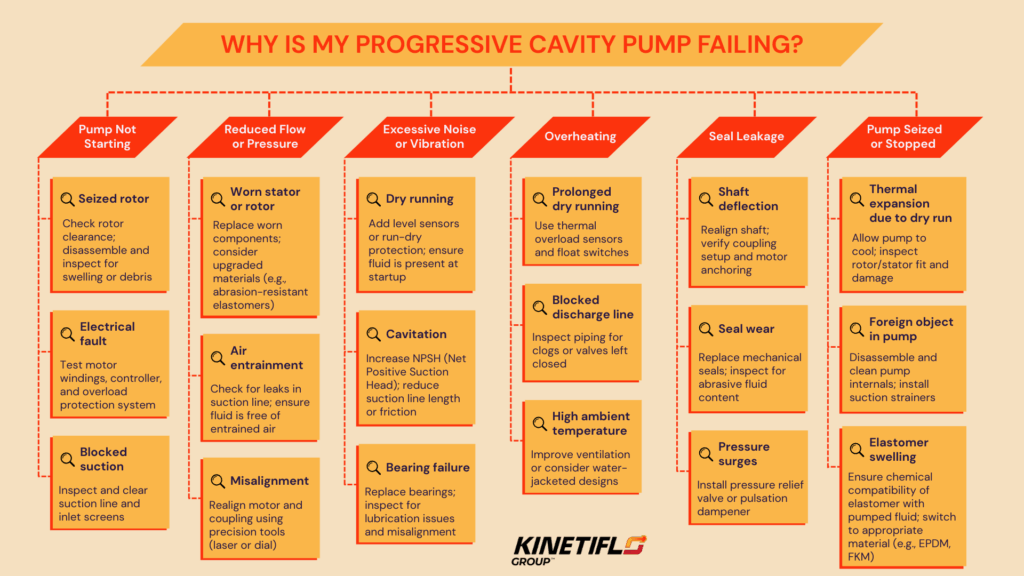
Progressive cavity pumps exhibit several failure symptoms that often serve as red flags for deeper systemic issues:
Pumps Not Starting: Often due to a seized rotor, motor electrical fault, or suction-side blockage.
Reduced Flow or Pressure: Indicates internal wear, air entrapment, or misalignment.
Excessive Noise or Vibration: A sign of mechanical imbalance, cavitation, or bearing failure.
Overheating: Common when pumps run dry or operate under excessive backpressure.
Pump Seized or Stopped Pumping: Typically caused by thermal expansion, dry running, or foreign object obstruction.
Stator or Rotor Wear: Wear from abrasive fluids, incorrect materials, or misalignment.
Seal Leakage: Caused by excessive shaft deflection, misalignment, or high-pressure surges.
Each of these symptoms reduces operational efficiency and points to underlying issues that, if ignored, may lead to catastrophic pump failure.
Root Causes Breakdown
Understanding root causes is essential to applying targeted fixes and developing preventive measures. Here are the most common culprits:
Material Compatibility Issues
PCPs must be properly matched to the fluid they are pumping. Incompatible materials (e.g., using a nitrile stator with aggressive solvents) degrade quickly, leading to stator swelling, delamination, and eventual pump failure. Elastomer selection is critical, especially in chemical and food-grade applications.
Dry Running or Incorrect Startup Procedures
A frequent and costly mistake, dry running occurs when a pump operates without sufficient fluid in the stator cavity. This creates heat from friction between the rotor and stator, leading to rapid wear, elastomer degradation, and eventual seizure. Many operators neglect to prime the pump or check for fluid presence before startup, particularly in automated systems.
Misalignment and Maintenance Neglect
PCPs require precise alignment between the motor and pump shaft. Misalignment causes uneven wear on bearings and seals, leading to vibration, leakage, and eventually rotor damage. Moreover, infrequent or improper maintenance, such as ignoring seal replacement schedules or operating with worn stators, compounds wear and reduces efficiency.
Solutions and Fixes
To mitigate common failures, a combination of best practices and engineering controls must be implemented.
Establish Routine Maintenance Schedules
Preventive maintenance is one of the most effective strategies for PCP longevity. Create a checklist that includes:
Visual inspection of seals and coupling.
Monitoring vibration and temperature.
Checking stator for signs of wear or deformation.
Re-lubrication of bearings according to manufacturer specs.
A preventive maintenance program should be tailored to the operating conditions and fluid characteristics.
Improve Installation Techniques
Proper installation minimizes stress on components and ensures reliable performance. Key tips include:
Correct Suction Lift: Ensure the pump is positioned to avoid cavitation and loss of prime.
Proper Inlet Pressure: Maintain adequate net positive suction head (NPSH) to prevent cavitation.
Anchor and Align: Secure baseplates and align shafts using laser or dial indicators.
Even a slight deviation in alignment can significantly reduce mechanical seal life and bearing integrity.
Use Material Upgrade Paths
When facing repeated failures due to wear or corrosion, upgrading materials can pay dividends:
Stators: Shift from standard elastomers to high-temperature or chemical-resistant materials.
Rotors: Apply coatings such as chrome plating or tungsten carbide to extend wear life.
Seals: Use double mechanical seals in high-pressure or abrasive applications.
Material upgrades should always be reviewed in light of fluid characteristics, temperature, and expected duty cycles.
Prevention: Designing Out Failure
Proactive design and system integration are key to reducing PCP failure rates. Consider the following strategies:
Design the System Around the Pump
Instead of sizing the pump after piping and tank layouts, reverse the process:
Select a pump based on flow and pressure requirements.
Design suction and discharge piping to minimize turbulence and pressure drop.
Ensure sufficient NPSH is available at all times.
Integrate Monitoring Systems
Real-time monitoring tools can detect early signs of failure:
Pressure Sensors: Detect blockages or discharge pressure spikes.
Thermal Sensors: Identify overheating from dry running or friction.
Vibration Monitors: Spot misalignment or bearing issues before they escalate.
These tools, combined with PLC alerts or SCADA systems, enable predictive maintenance and quick intervention.
Operator Training and SOPs
Many failures result from human error. Regular training and clear standard operating procedures (SOPs) help operators understand:
Proper startup and shutdown sequences.
Priming protocols and dry run prevention.
When to escalate observed anomalies.
Clear documentation and signage near control panels reinforce best practices.
Why Working With Experts & Eliminating Costly Failures Pays Off
Progressive cavity pump failures can be frustrating and expensive, but they are far from inevitable. By identifying common failure symptoms, tracing their root causes, and applying targeted fixes, industrial operations can dramatically increase uptime, reduce maintenance costs, and extend the life of their equipment.
Better still, designing systems with the pump in mind — and integrating real-time monitoring and strong maintenance protocols — makes failure prevention part of everyday operations. Investing in reliability engineering today means fewer surprises tomorrow.
Need help troubleshooting or upgrading your pumping systems? Contact Kinetiflo to speak with a PCP expert and learn how we can help you reduce failures and improve operational efficiency.