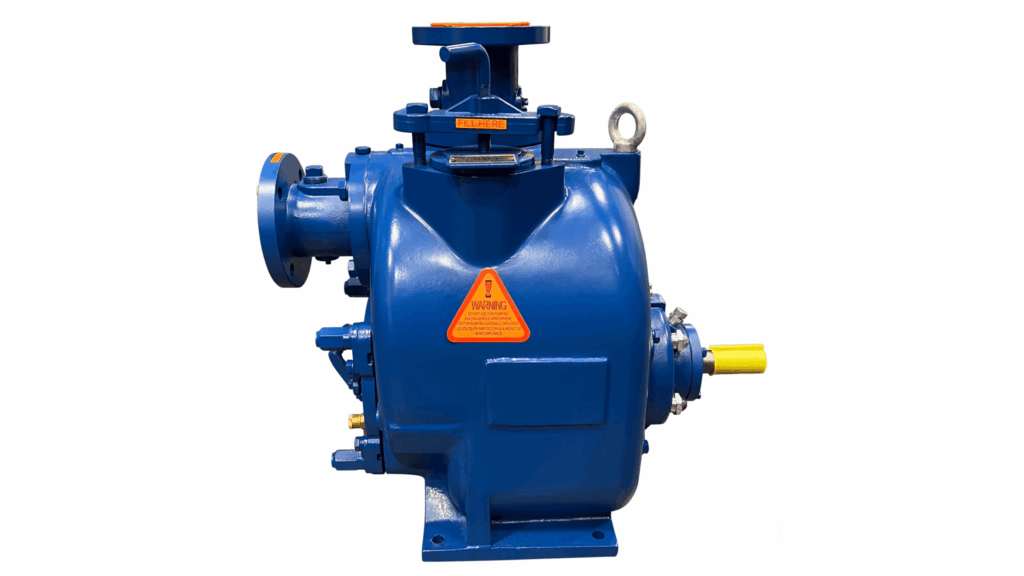
Self-priming pumps are staples in countless industrial settings, prized for their simplicity, accessibility, and versatility. From construction sites to wastewater treatment facilities, these pumps eliminate the need for external priming systems, enabling faster setup and easier maintenance. Their ability to evacuate air from the suction line and start pumping with minimal intervention makes them invaluable in operations requiring flexibility and reliability.
However, recurring failures in self-priming pumps can lead to more than just headaches. Each breakdown means unplanned downtime, loss of productivity, increased labor, and in worst-case scenarios, full equipment replacement. Given these stakes, the adage rings especially true: “Prevention is better (and cheaper) than repair.” A proactive approach to maintenance and design can significantly reduce failure rates and prolong the service life of self-priming pump systems.
Top 7 Failure Modes in Self-Priming Pumps
Understanding the most common failure scenarios is the first step toward preventing them. Here are seven critical issues frequently encountered in self-priming pump systems:
1. Failure to Prime
Causes: Air leaks in the suction line, clogged suction pipes, insufficient fluid level in the suction source.
Consequences: Pump runs dry, leading to excessive heat buildup and damage to seals or impellers. This is one of the most common and preventable issues.
2. No Flow or Deadhead Conditions
Causes: Discharge valve left closed, blocked impeller, reverse motor rotation.
Consequences: Excessive pressure buildup causing overheating, seal failure, or even casing rupture.
3. Low Flow or Low Pressure
Causes: Impeller wear, suction lift too high, cavitation due to vapor bubbles.
Consequences: System underperformance, operator overcompensation, and increased energy consumption.
Consequences: Accelerated wear of bearings and seals, potential for rotor imbalance.
5. Mechanical Seal Leakage
Causes: Shaft misalignment, worn seals, or incorrect installation.
Consequences: Environmental contamination, fluid loss, motor failure from water ingress.
6. Overheating
Causes: Dry running, throttled flow, poor ventilation in enclosed areas.
Consequences: Damage to elastomers and seals, shortened motor lifespan.
7. Erratic Power Consumption
Causes: Sudden flow variations, clogging, motor overloads.
Consequences: Inconsistent performance, breaker trips, and untraceable energy losses.
Root Causes Behind Failures
Most self-priming pump failures trace back to one or more of the following systemic issues:
Design Oversights
Choosing a pump without regard to system dynamics often leads to misapplication. A pump oversized for the system can experience excessive wear, while undersized units may never reach proper performance thresholds.
Installation Errors
Poorly installed suction lines, improper anchoring, or incorrect pipe sizing are common contributors to failures. A misaligned pump will vibrate excessively, wear out bearings, and stress mechanical seals.
Maintenance Gaps
Neglecting scheduled maintenance is a surefire way to shorten a pump’s life. Missing seal inspections or running a pump with worn-out impellers creates a cascade of failure points.
Operator Behavior
Inadequate training, inconsistent startup procedures, and the absence of standard operating protocols (SOPs) introduce human error as a risk factor.
Preventive Strategies and Solutions
Solving self-priming pump problems begins with prevention. Here’s how to address each failure mode with practical, proactive strategies:
Routine Priming Verification
Install sight glasses or priming chambers to visually confirm liquid presence before startup.
Use check valves to prevent fluid backflow from the discharge line.
Educate operators to monitor for dry sounds during startup.
Flow Assurance Practices
Equip systems with pressure gauges and flow meters to ensure pump output matches design specs.
Use automatic alerts for low-pressure conditions to prevent running under insufficient flow.
Check discharge lines and impellers regularly for obstructions.
Seal and Bearing Inspection
Implement condition-based maintenance: replace seals and inspect bearings based on runtime hours and operating conditions.
Lubricate bearings according to manufacturer specifications.
Include mechanical seal inspections in monthly preventive routines.
Smart Monitoring Tools
Install thermal sensors to detect overheating.
Use vibration monitors to capture early signs of imbalance.
Analyze power consumption trends with data loggers or SCADA integrations.
Training and SOP Enforcement
Develop startup and shutdown guides with clear visuals.
Run quarterly training refreshers for operators and maintenance techs.
Maintain logbooks to track maintenance and operating anomalies.
These strategies, when applied consistently, can reduce emergency repairs and increase system reliability.
Learn How Experts Make Prevention Part of the Process
Failures in self-priming pumps are not inevitable. With the right knowledge, tools, and routines, they can be anticipated and mitigated long before they lead to downtime. Preventive measures — from visual priming checks to data-driven monitoring — transform pump reliability from a hope into a systematized practice.
The ROI of prevention is undeniable: reduced energy costs, fewer operational disruptions, lower long-term repair expenses, and improved safety. As industries become more connected and performance-driven, integrating pump health into your operational KPIs is a smart move.
Want to prevent the next unplanned shutdown before it starts? Contact Kinetiflo today to speak with an expert about system audits, custom solutions, or advanced monitoring strategies that keep your pumps running strong.